In the last 30 days your bar comes down to six decisions: final guest count, a locked 2-cocktail menu, the liquor run, ice, power/water at the venue, and a timeline the coordinator actually has. Do the shopping run 3-7 days out, buy 1.5 lb of ice per guest (2 lb in summer), and get your bartender's certificate of insurance to the venue at least 14 days ahead. Everything else on this page is detail.
Thirty days before a wedding, the bar is usually the last unfinished item on the list. The catering is contracted, the florals are ordered, the DJ has a timeline — and the bar is still a group text that says "we'll just buy some tequila." That works right up until 5:40 p.m. on a Saturday when 140 people hit the cocktail hour at once and there are two bags of ice for the entire night.
This is the checklist we hand to couples who book a dry-hire wedding bartender service with us. It's written the way the last month actually unfolds — not as an abstract to-do list. Everything here assumes California dry hire: you buy the alcohol, we bring the bar, the bartenders, ice, mixers, garnish, glassware and tools. If that model is new to you, read how dry hire works under California ABC law first, then come back.
30 days out: lock the count and the shape of the bar
Your guest count will still move — it always does — but you need a working number now because every other calculation hangs off it. Take your RSVP count and add 5% for late yeses and plus-ones nobody told you about. That's your bar number. If your caterer's final count deadline is 14 days out, your bar number can lag it by a week, but not more.
- Confirm the headcount range — not the exact number. "110 to 125" is enough to plan against.
- Confirm bartender staffing — one bartender per 50-60 guests for a full bar, per 75 if you're doing beer, wine and one batched cocktail. Below that ratio you get a line, and a line at cocktail hour kills the energy of the room.
- Decide beer/wine only vs. full bar. This is a real fork. Beer and wine only cuts your shopping bill roughly in half and speeds service dramatically. Full bar is warmer and more fun, and it's what most of our couples choose.
- Book if you haven't. Peak Saturdays in May, June, September and October in LA and Orange County go 6-9 months out. If you're reading this 30 days from your date and still unbooked, text us — we keep some flex, but not much. More on lead times in how far in advance to book a mobile bar.
Also at 30 days: request the certificate of insurance. Nearly every venue in Southern California — from Malibu estates to Balboa Park sites to backyard permits in Riverside — requires a COI naming the venue as additional insured, and they usually want it 14 to 30 days before the event. We carry $2M in general liability and issue COIs the same day you send us the venue's exact legal name and address. Ask your venue coordinator for that language now, in writing, so nobody is chasing paperwork in week four.
21 days out: lock the cocktail menu
Two signature cocktails. That's the answer for almost every wedding. One spirit-forward and one bright/citrusy, plus beer, wine, and a non-alcoholic option. Two is enough to feel personal and few enough to batch and pour fast.
Pick drinks that survive a batch. A margarita, a paloma, a Aperol spritz, a bourbon smash, a mezcal mule — all of these can be pre-mixed in bulk and poured over ice in ten seconds. An espresso martini, a whiskey sour with egg white, or anything muddled to order will bottleneck a 130-person cocktail hour. If you want ideas that are actually service-friendly, we broke down the mechanics in signature cocktails for couples and, for Latino weddings, Mexican wedding cocktail menu ideas.
- Name them. "The Ana" and "The Marcos" on a menu card costs nothing and guests love it.
- Include one zero-proof drink that isn't soda. An agua fresca, a grapefruit-lime spritz, a virgin paloma. Pregnant guests, kids and designated drivers make up 10-20% of most weddings.
- Send the menu to your bar team. We build the shopping list off the final menu, not the other way around.
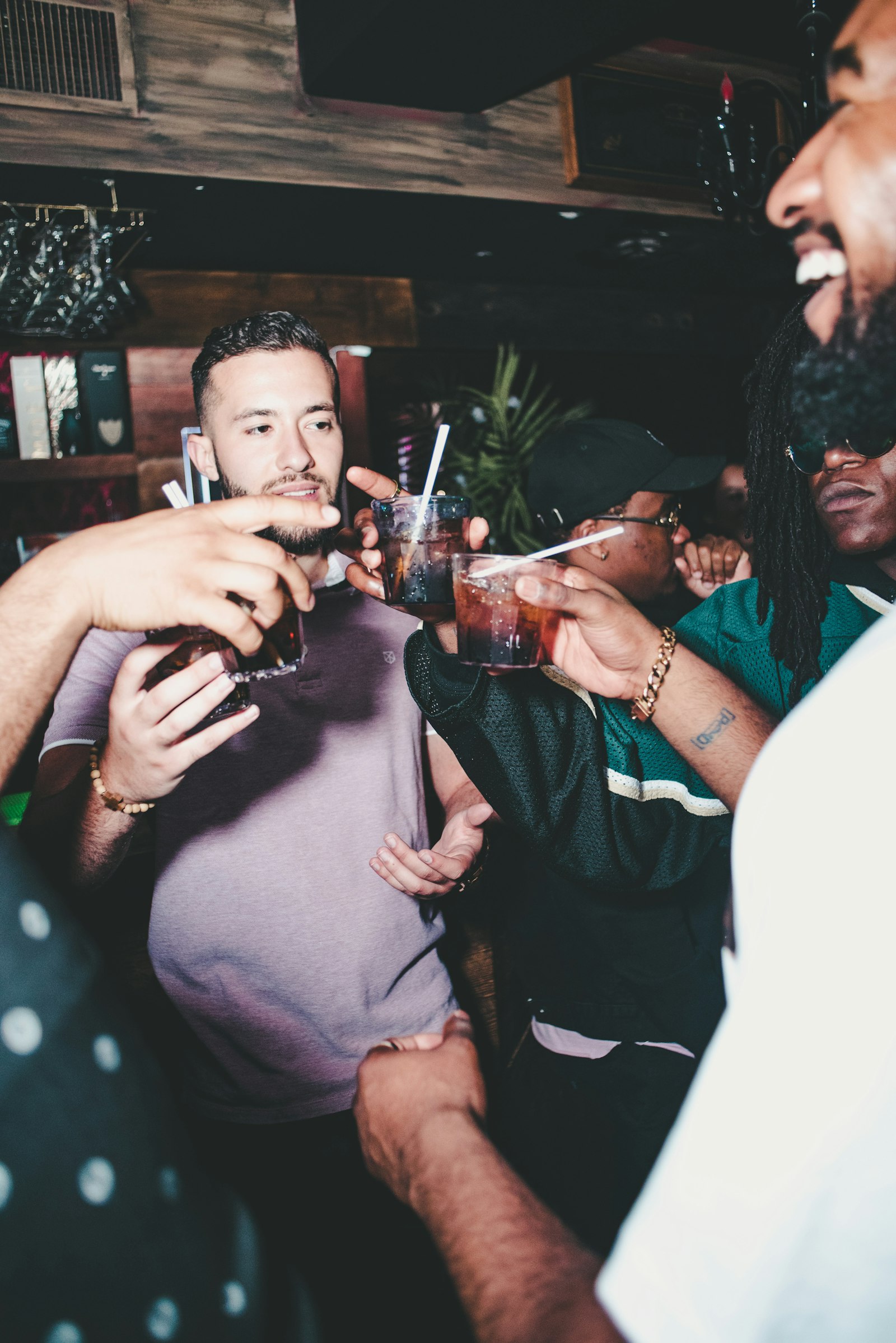
14 days out: venue logistics, power, water, floor plan
This is the week that separates a smooth bar from a stressful one, and almost none of it is about alcohol.
- Power. Ask the venue: is there a working outlet within 50 feet of the bar position? We need one 15-amp circuit for blenders, lights and a small fridge if you've added one. If the answer is no, you need a quiet generator or you plan a no-power bar — which is completely doable, but we have to know now.
- Water. A hose bib or spigot within reasonable reach makes cleanup and hand-rinsing far easier. If there's no water, we bring jugs. Again — tell us in advance.
- Bar position on the floor plan. Put the bar where it pulls people away from the dance floor entrance, not into it. Never directly beside the DJ (guests can't order over the speakers) and never at the far end of a long lawn (you'll lose the room during dinner). A good default: adjacent to cocktail hour space, visible from the reception, 20+ feet from the head table.
- Load-in and parking. Confirm the earliest load-in time, the gate code, the loading path (stairs? gravel? 300 feet of grass?), and where the van parks after. Grass and stairs both add setup time. We'd rather know than discover it.
- COI delivered. Confirm the venue has received and accepted it. "Sent" is not "accepted."
- Last call time. Set it now. Standard is 30 minutes before the event end time — so a 10 p.m. hard-out means last call at 9:30. Tell the DJ and the coordinator, because last call and the last song should be coordinated, not competing.
7 days out: the shopping run
Now the fun part. In California dry hire, you buy the alcohol, which is genuinely good news: you pay retail instead of catering markup, and every unopened bottle goes home with you. On a 120-guest wedding that difference is often $900-$1,800 versus a full-service open bar. We ran the numbers in mobile bar vs. open bar and in the cost of a mobile bar wedding in Los Angeles.
Where to buy in SoCal: Costco has the best price per liter on mainstream tequila, vodka and wine, and Kirkland Signature spirits punch far above their price — but they don't take returns on alcohol in California. Total Wine takes returns on unopened bottles with a receipt, which makes them the smart choice for the "buy extra to be safe" portion of your order. BevMo works for specialty bottles and last-minute fills. For beer by the case, a warehouse club or a big-box grocery beats a liquor store every time. Buy at one store if you can — a single receipt makes returns painless.
Do the run 5-7 days out, not the day before. You want a buffer for a store being out of your mezcal, and you want the wine chilled by Friday, not Saturday afternoon.
| Item | Quantity per 100 guests (5-hour reception) | Notes |
|---|---|---|
| Tequila / vodka / whiskey (750 ml) | 8-10 bottles total across spirits | ~17 pours per 750 ml at 1.5 oz. Skew toward whatever your signature cocktails use. |
| Wine (750 ml) | 24-30 bottles, split 60% white/rosé, 40% red | 5 pours per bottle. In summer SoCal heat, push white and rosé higher. |
| Beer | 150-200 cans/bottles | Cans over bottles for outdoor venues. Mix one light lager, one Mexican lager, one IPA or local craft. |
| Champagne / sparkling for toast | 12-15 bottles | 6 small toast pours per bottle. Add 5 more if you're doing a sparkling welcome pour. |
| Ice | 150 lb standard · 200 lb May-September | 1.5 lb per guest minimum, 2 lb in summer. Half cubed for drinks, half for chilling beer and wine. |
| Mixers (soda, tonic, cola, ginger beer) | 8-10 two-liters + 2 cases of cans | Cans hold carbonation better across a 5-hour night. |
| Juice (lime, grapefruit, orange, cranberry) | 3-4 gallons total | Fresh lime is worth it. Everything else can be bottled. |
| Limes / lemons / oranges | 40 limes · 20 lemons · 10 oranges | Buy 25% more than you think. Garnish gets used faster than anyone expects. |
| Non-alcoholic (agua fresca, sparkling water, sodas) | 3 gallons + 2 cases sparkling water | Assume 15% of guests drink zero alcohol all night. |
| Glassware or eco disposables | 2.5 vessels per guest | People set drinks down and abandon them. Always. Plan 2.5x, not 1x. |
A word on ice, because it's the single most common failure. 1.5 lb per guest is the floor. In July in the Inland Empire or a Temecula vineyard at 96°F, go to 2 lb — that's 200-240 lb for a 120-person wedding, roughly 30 bags. Ice melts in coolers, ice gets used to chill beer, and no gas station within 15 minutes of your venue has 100 lb in stock at 7 p.m. Buy it the morning of, in one trip, from a grocery store that sells it in 20 lb bags.
Glassware vs. eco disposables. Real glass looks better in photos and feels better in hand — budget $1.50-$3 per guest for rental, plus a rack return. Compostable clear cups run $0.30-$0.60 per guest and are the right call for lawn venues, beaches, pool-adjacent receptions and anywhere the venue bans glass. Many SoCal outdoor venues do ban glass near pools; ask before you rent.
Get an instant quote
Tell us guest count and date — the founder texts back a real number, usually within the hour.
72 hours out: paper, print, and the weather call
- Final headcount to the bar team. The real number, not the range.
- Print menu cards and signage. Two cards on the bar plus one A-frame or easel sign at the cocktail hour entrance. Guests read the sign, decide before they reach the bar, and your line moves 30% faster. Include the two signature cocktails, the beer and wine list, and the zero-proof option.
- Cash and tip envelopes. If you're pre-paying gratuity, put it in a sealed envelope with the bartender's name and hand it to your coordinator, not to a groomsman. If you're allowing a tip jar, decide now and tell the bar team — some couples prefer no jar at all. Standard is 18-20% of the bar service fee. Full breakdown in our wedding bartender tipping guide.
- Weather plan. Check the forecast now and again at 24 hours. Wind is the real SoCal enemy, not rain — a 15 mph coastal gust takes out menu cards, napkins and anything garnished on top. Have a tent or overhang identified for the bar, and clips or weights for signage. If there's a rain plan, the bar position in the rain plan needs to be decided in advance, with power confirmed there too.
- Chill everything you can. White wine, rosé, sparkling, beer, mixers. A warm-start bar takes two hours to catch up and burns through your ice doing it.
24 hours out: the handoff
The single most valuable thing you can do the day before is send one message to your coordinator, DJ, photographer and bar lead that contains the same five facts: bar open time, dinner service window (bar goes quiet), toast time, last call time, and event end time. Everyone works off that. Conflicting timelines are why bars get slammed at exactly the wrong moment.
- Confirm load-in time and gate access with the venue one more time.
- Stage the alcohol. Boxes in one place, labeled, ideally in a shaded or indoor spot at the venue or in a car that isn't baking in the sun. Heat ruins wine faster than anything.
- Assign one bar point person who is not you and not your parents. A cousin, a coordinator, a sibling. One name.
- Confirm the COI is on file and the venue rep who accepted it is working that day.
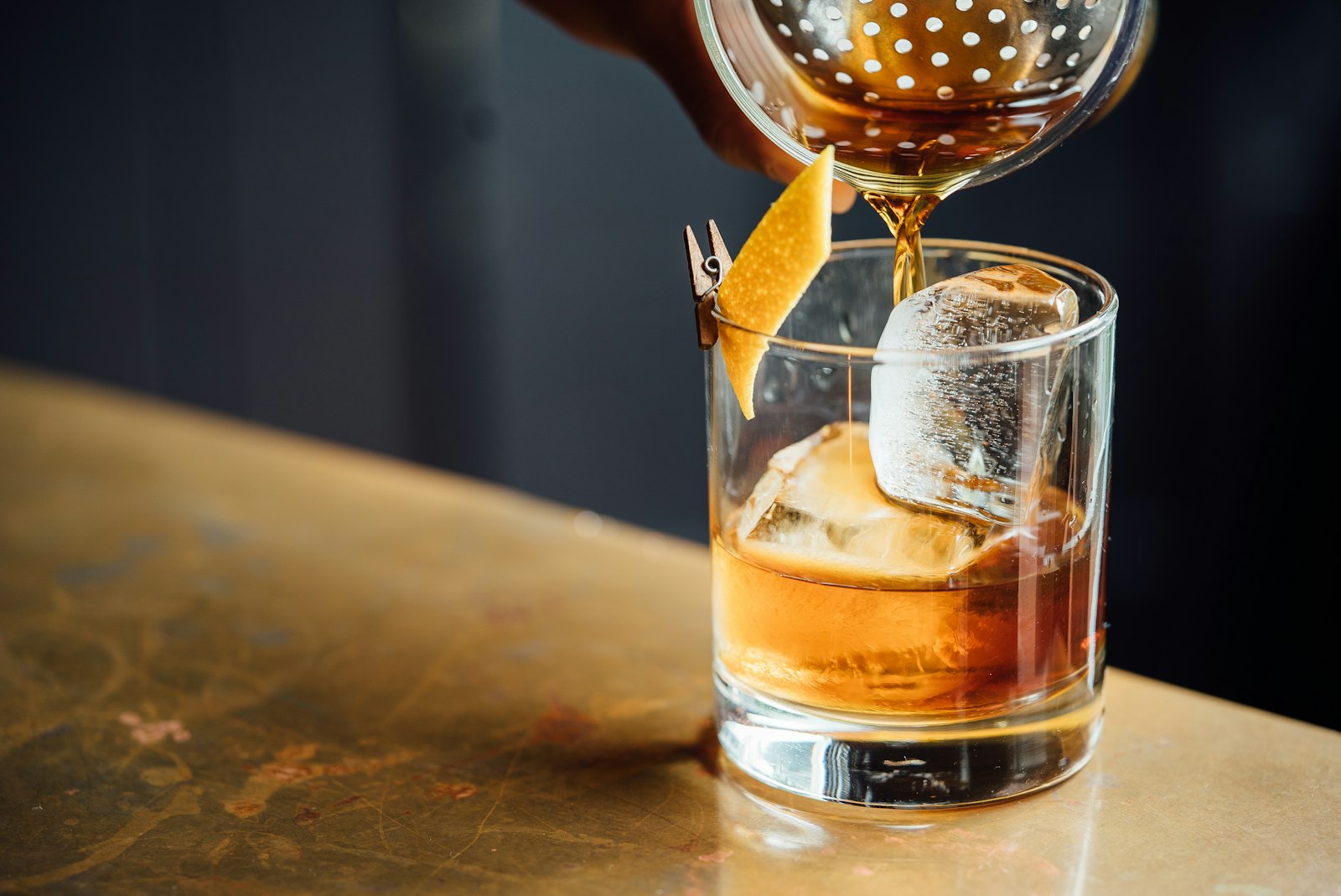
Day-of: morning, service, breakdown
Morning
- Buy the ice. Morning of, one trip, 1.5-2 lb per guest. This is the only item you should not buy early.
- Cut garnish or let the bar team do it — we arrive 90 minutes before service and cut fresh on site.
- Deliver alcohol to the venue if it isn't already there, and point the bar lead at it.
- Hand off the tip envelope to your coordinator.
- Then stop. Genuinely. Once the ice is bought and the boxes are at the venue, the bar is no longer your job. Go get ready.
During the event
You should not be thinking about the bar at all after doors open. That said, three timing rules matter:
- Open the bar 15 minutes before cocktail hour officially starts. Guests always arrive early and a drink in hand relaxes a room instantly.
- Keep the bar open during dinner but expect it to go quiet. That's when we restock, re-ice and pre-batch for the second wave after the first dance.
- Last call, 30 minutes before end. Announced by the DJ, backed by the bar team. Then we switch to water and coffee service, which is both the responsible move and the reason your guests remember the night fondly.
After: breakdown and returns
Our crew breaks down, bags trash, wipes the bar area and leaves the space cleaner than we found it — typically 45-60 minutes after last call. Your remaining unopened bottles get boxed and handed to your point person. Take the Total Wine receipt and return what you didn't open that week; most couples get $200-$500 back. Sealed beer and wine keep fine. Open bottles go home to the after-party.
The master checklist
| Task | When | Who owns it |
|---|---|---|
| Set working guest count (RSVP + 5%) | 30 days | Couple |
| Confirm bartender count & package tier | 30 days | Couple + bar team |
| Request venue COI language (legal name, address) | 30 days | Couple → venue |
| Lock 2 signature cocktails + zero-proof option | 21 days | Couple |
| Send final menu to bar team | 21 days | Couple |
| Receive shopping list from bar team | 21 days | Bar team |
| Confirm power outlet + water access at bar position | 14 days | Venue + bar team |
| Mark bar position on the floor plan | 14 days | Coordinator |
| Confirm load-in time, gate code, parking, load path | 14 days | Coordinator |
| COI issued and accepted by venue | 14 days | Bar team → venue |
| Set last-call time; share with DJ | 14 days | Couple + coordinator |
| Liquor, wine, beer, mixer shopping run | 5-7 days | Couple (or designated buyer) |
| Confirm glassware rental or order eco disposables | 7 days | Couple |
| Final headcount to bar team | 72 hours | Couple |
| Print menu cards + bar signage | 72 hours | Couple |
| Prepare cash/tip envelopes | 72 hours | Couple |
| Weather / wind / rain plan for bar position | 72 hours | Coordinator |
| Chill wine, beer, mixers | 48 hours | Couple |
| Send unified timeline to all vendors | 24 hours | Coordinator |
| Stage alcohol; name one bar point person | 24 hours | Couple → point person |
| Buy ice (1.5-2 lb per guest) | Day-of AM | Point person |
| Deliver alcohol to venue; hand off tip envelope | Day-of AM | Point person |
| Bar setup, garnish prep, batching | 90 min before | Bar team |
| Open bar 15 min early | Cocktail hour | Bar team |
| Restock and re-batch during dinner | Dinner | Bar team |
| Last call, 30 min before end; water + coffee | End of night | Bar team + DJ |
| Breakdown, trash, box unopened bottles | After | Bar team → point person |
| Return unopened alcohol with receipt | Week after | Couple |
What it costs
Our all-inclusive packages cover the bar, the bartenders, ice, mixers, garnish, glassware, tools and setup/breakdown — you supply only the alcohol. Intimate is $695 for 30-50 guests, Signature is $1,195 for 75-100, and Grand runs $2,395+ for 150 and up. We're RBS-certified and carry $2M in liability, and the team is bilingual English/Spanish, which matters more than people expect at SoCal weddings.
We work across Los Angeles, Orange County, San Diego and the Inland Empire. If you're OC-specific, the Orange County mobile bar rental guide covers venue quirks from Laguna to Anaheim. Text or WhatsApp (415) 559-2981 with your date and guest count and you'll get a real number back — usually within the hour, not a form response three days later. Or get an instant quote from the packages and calculator page.
Frequently asked questions
How much ice do I need for a wedding bar?
Plan 1.5 pounds of ice per guest as an absolute minimum, and 2 pounds per guest for any event between May and September in Southern California. For 120 guests that's 180 to 240 pounds, roughly 25 to 30 bags. Buy it the morning of the wedding in a single trip, and split it between drink ice and ice used to chill beer, wine and mixers.
When should I buy the alcohol for my wedding?
Five to seven days before the wedding. That gives you a buffer if a store is out of something and time to chill wine, beer and mixers properly. Costco has the best prices but doesn't accept alcohol returns in California, while Total Wine takes back unopened bottles with a receipt, so buy your safety margin there.
How many bartenders do I need for 150 guests?
Three bartenders for a full bar at 150 guests, or two if you're serving beer, wine and one batched signature cocktail. The rule of thumb is one bartender per 50 to 60 guests for full service and one per 75 for a simplified menu. Understaffing is the number one cause of long cocktail hour lines.
What is a certificate of insurance and when does the venue need it?
A certificate of insurance, or COI, is a one-page document proving your bar vendor carries liability coverage, usually naming the venue as an additional insured party. Most Southern California venues require it 14 to 30 days before the event. Ask your venue for their exact legal name and address early, since the COI has to match it word for word.
How many signature cocktails should we have at our wedding?
Two is the sweet spot: one spirit-forward and one bright and citrusy, alongside beer, wine and a zero-proof option. Two cocktails can be pre-batched and poured in seconds, which keeps the line moving. Four or more made-to-order drinks will bottleneck cocktail hour at any guest count above about 80.
What time should last call be at a wedding?
Thirty minutes before your venue's hard end time. If the event ends at 10 p.m., last call is 9:30, announced by the DJ and backed by the bar team. After last call the bar switches to water and coffee service, which helps guests get home safely and keeps you within venue and insurance requirements.